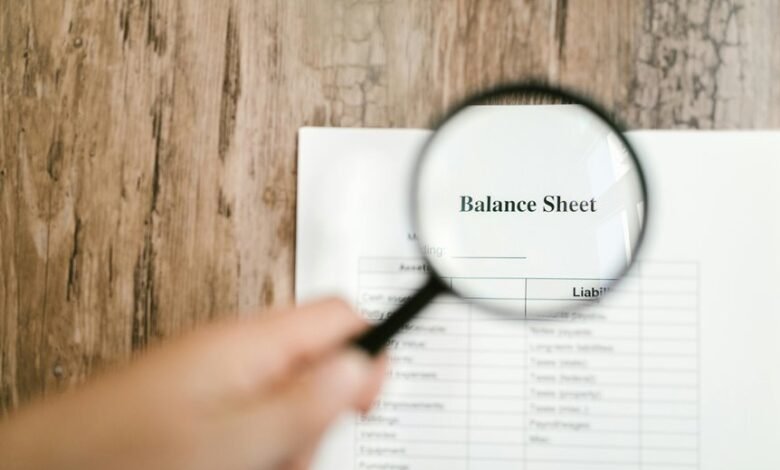
The balance sheet serves as a critical tool for understanding a company’s financial position at any given moment. It outlines assets, liabilities, and equity, offering insights into liquidity and overall stability. Stakeholders rely on this data to inform decisions about investments and resource allocation. However, the implications of these figures go beyond mere numbers, prompting deeper inquiries into the company’s financial strategies and potential for growth. What factors influence these outcomes?
Understanding the Components of a Balance Sheet
While a balance sheet may appear straightforward at first glance, its components reveal a complex structure that is essential for assessing financial health.
The assets and liabilities form the core, showcasing what a company owns versus what it owes.
The equity section provides insight into ownership, reflecting the residual interest after liabilities are deducted from assets, thus illustrating the organization’s financial position.
Analyzing Financial Health Through Balance Sheets
How can a balance sheet serve as a vital tool for evaluating a company’s financial health?
It facilitates liquidity analysis by revealing current assets against liabilities. Financial ratios derived from this data, such as the current ratio and quick ratio, provide insights into a company’s ability to meet short-term obligations.
Thus, balance sheets enable stakeholders to assess fiscal stability and operational efficiency effectively.
Practical Applications of Balance Sheets in Business Decisions
Building on the insights gained from assessing a company’s financial health through balance sheets, practical applications of this financial statement become evident in various business decisions.
Business leaders utilize balance sheets for liquidity assessment, ensuring sufficient cash flow for operations.
Moreover, effective asset management strategies emerge from analyzing asset distributions, enabling informed decisions on investments, resource allocation, and overall financial stability for sustainable growth.
Conclusion
In conclusion, balance sheets serve as a vital tool for assessing a company’s financial health, enabling stakeholders to gauge liquidity and make informed decisions. By understanding the components and analyzing the data presented, businesses can navigate the financial waters with greater confidence. Ultimately, a well-maintained balance sheet can be the difference between thriving and merely surviving in a competitive landscape, reminding us that having one’s financial house in order is essential for sustainable growth.